
" transform="translate(3.467 12.828)" width="18px"/><path d="M 0 0 L 18 0" fill="transparent" height="1px" id="LYQ6umBYY" stroke-dasharray="" stroke-linecap="round" stroke-linejoin="round" stroke-width="2" stroke="rgb(0, 0, 0)" transform="translate(3.467 6.828)" width="18px"/><path d="M 0 0 L 18 0" fill="transparent" height="1px" id="gz77XbKFC" stroke-dasharray="" stroke-linecap="round" stroke-linejoin="round" stroke-width="2" stroke="rgb(0, 0, 0)" transform="translate(3.467 18.828)" width="18px"/></svg>)
Back to Writing
Jan 11, 2026
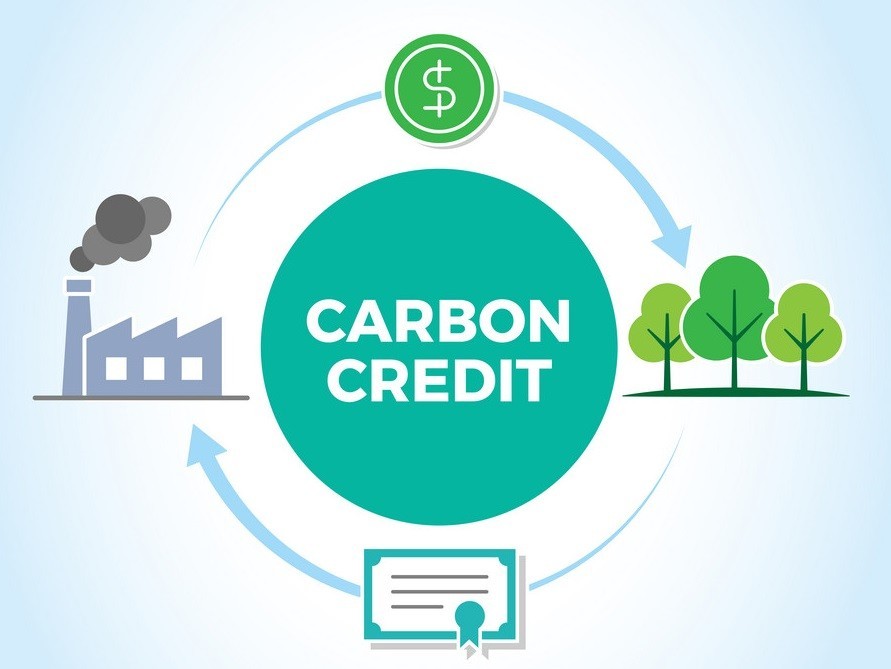
What makes a carbon credit a high quality carbon credit
The question of quality sits at the heart of the credibility crisis facing carbon markets today. While the idea of a carbon credit is conceptually simple, representing a quantified reduction or removal of greenhouse gas emissions, the reality is far more complex. Two credits that look identical on paper can represent very different levels of environmental integrity, financial risk, and long term credibility. This divergence has led to confusion among buyers, skepticism from regulators, and frustration among genuinely high performing project developers.
At RenewCred, we approach quality not as a marketing label or a static certification outcome, but as a continuous signal of confidence. A high quality carbon credit is one that reduces uncertainty for everyone involved. It allows buyers to stand behind their claims without hesitation, financiers to underwrite projects with clarity, and regulators to trust that markets are delivering real climate outcomes.
Quality begins with credibility, not compliance
Much of the current discourse around carbon credit quality focuses on compliance with standards and methodologies. While compliance is necessary, it is not sufficient. A project can technically comply with every rule and still leave open questions about real world performance. High quality credits go beyond procedural correctness. They create credibility.
Credibility emerges when a credit makes it easy to answer fundamental questions. Did the emissions reduction actually occur. Can it be demonstrated using real evidence rather than assumptions. Is the reduction continuing over time. And if something goes wrong, will the system detect it.
When a credit reduces the need for trust and replaces it with verifiable information, it moves closer to being truly high quality.
Additionality remains essential, but it must evolve
Additionality has long been treated as the cornerstone of carbon credit quality. The principle is straightforward. A project should only be credited if carbon finance played a decisive role in enabling the emissions reduction or removal. In practice, however, additionality assessments rely on counterfactuals. They attempt to predict what would have happened in an alternate world where carbon markets did not exist.
This makes additionality inherently uncertain. It depends on assumptions about future regulations, market prices, technology adoption, and investor behavior. These assumptions can change rapidly, particularly in fast moving sectors such as renewable energy, mobility, and industrial decarbonization.
High quality credits acknowledge this uncertainty rather than hiding it. They treat additionality as a dynamic condition rather than a one time hurdle. As markets evolve and technologies mature, quality systems must revisit baselines, reassess incentives, and adapt crediting logic accordingly. Static additionality assessments are increasingly misaligned with a world of rapid transition.
Measurement should take precedence over estimation
One of the clearest differentiators between lower and higher quality credits lies in how emissions outcomes are quantified. Many projects rely heavily on estimates and default factors because direct measurement is difficult, costly, or historically unavailable. While this may be unavoidable in some contexts, it introduces layers of uncertainty.
By contrast, projects that generate direct operational data offer a much stronger foundation for quality. Energy generation data, fuel consumption records, material throughput, sensor based measurements, and system logs all provide tangible evidence of performance. These data streams allow emissions reductions to be calculated with far greater confidence and revisited over time.
At RenewCred, this distinction is central to how we think about quality. Our platform, Net Zero, does not replace or own project level digital monitoring systems. Instead, it sits on top of the project developer’s digital MRV infrastructure, independently collecting, analyzing, and reconciling data. This separation matters. It ensures that monitoring systems remain project specific, while the registry layer maintains independence and objectivity in analysis.
When registries can see and interpret live or near real time data, quality shifts from being an abstract concept to a continuously observable reality.
Monitoring must be continuous, not episodic
Traditional carbon credit systems are built around periodic verification events. A verifier visits a project site once a year or once every few years, reviews documents, conducts sampling, and issues an opinion. While this approach made sense in a low data environment, it is increasingly misaligned with modern expectations of transparency.
Emissions reductions do not happen once a year. They happen daily, or they do not happen at all. A high quality crediting system recognizes this by emphasizing continuous monitoring wherever feasible.
Continuous monitoring does not eliminate the need for third party verification. Rather, it strengthens it. Verifiers gain access to richer datasets, anomalies can be flagged early, and risks can be managed proactively rather than discovered after the fact. From a quality perspective, this shift is transformative. It turns verification from a backward looking exercise into an ongoing assurance process.
Permanence and durability must be grounded in reality
Permanence is often discussed in binary terms, particularly for removal based credits. Either carbon stays out of the atmosphere for a defined period, or it does not. In reality, permanence exists on a spectrum and depends heavily on project design, monitoring, and risk management.
High quality credits are transparent about permanence risks and explicit about how those risks are managed. This includes clear buffer mechanisms, insurance structures where appropriate, conservative crediting approaches, and robust monitoring over time.
Pretending that all credits offer identical durability undermines trust. A mature market acknowledges differences and prices them accordingly. Quality improves when systems are honest about limitations rather than overconfident in claims.
Leakage and system boundaries cannot be an afterthought
Leakage remains one of the most misunderstood aspects of carbon credit quality. It refers to the risk that emissions reductions in one location cause increases elsewhere, effectively offsetting the benefit.
High quality credits take system boundaries seriously. They define what is included, what is excluded, and why. They rely on data to detect displacement effects where possible, rather than assuming them away through conservative factors alone.
In sectors such as energy, transport, and industrial processes, digital data can significantly reduce leakage uncertainty by tracking activity shifts across systems. Quality improves when boundaries are defined using evidence rather than convenience.
Transparency builds trust faster than perfection
No carbon credit system is flawless. What distinguishes high quality systems is not the absence of uncertainty, but the willingness to surface it.
Transparency around methodologies, assumptions, data sources, and limitations allows buyers and regulators to make informed decisions. It also creates accountability. When systems are open to scrutiny, they improve faster.
At RenewCred, transparency is a design principle. Credit lifecycles, data interpretations, and analytical logic are made accessible so that trust is built through understanding rather than reputation alone.
Quality must be financeable
Finally, a high quality carbon credit must be usable within real financial systems. This means clarity around ownership, traceability, double counting safeguards, and alignment with broader climate governance frameworks.
Credits that cannot be integrated into balance sheets, lending structures, or regulatory reporting will struggle to scale regardless of environmental merit. Quality therefore includes institutional usability. A credit that is scientifically robust but operationally opaque will fail to mobilize capital at the speed required for climate transition.
High quality carbon credits are not defined by a single attribute. They emerge from the interaction of credible additionality, robust measurement, continuous monitoring, transparent governance, and financial usability.
Most importantly, quality is not static. It must evolve as technology improves, data becomes more accessible, and climate ambitions grow.
At RenewCred, we believe that the future of carbon markets lies in moving away from trust based systems toward evidence based infrastructure. When quality can be observed rather than assumed, carbon credits become what they were always meant to be. A bridge between climate impact and capital at scale.
